Event Speakers
The Event speakers will be added to this page as the programme is finalised.
Andy Noyes
Andy Noyes is a Professor of Education at the University of Nottingham from where he graduated with a BSc in Mathematics in 1991. Following a decade as a secondary teacher in a Nottinghamshire secondary school, he joined the School of Education as a teacher educator in 2001. He was Head of the School of Education from 2014-18 and Associate Pro Vice Chancellor for Research and Knowledge Exchange from 2018-20.
Andy has led many large-scale projects and is the founding Director of the Observatory for Mathematical Education. His research has explored mathematical attitudes and engagement, qualifications and assessment, and educational policy and change. He is particularly interested in systems thinking and implementation science, and he has advised regulatory bodies on qualifications reform.
Andy was the Chair of the Joint Mathematical Council of the UK from 2018-24. He is a member of the Royal Society's Advisory Committee on Mathematics Education and was part of the Mathematical Futures Programme Board. He advocated for the development of the Academy for the Mathematical Sciences and has supported many major research projects and intervention programmes.
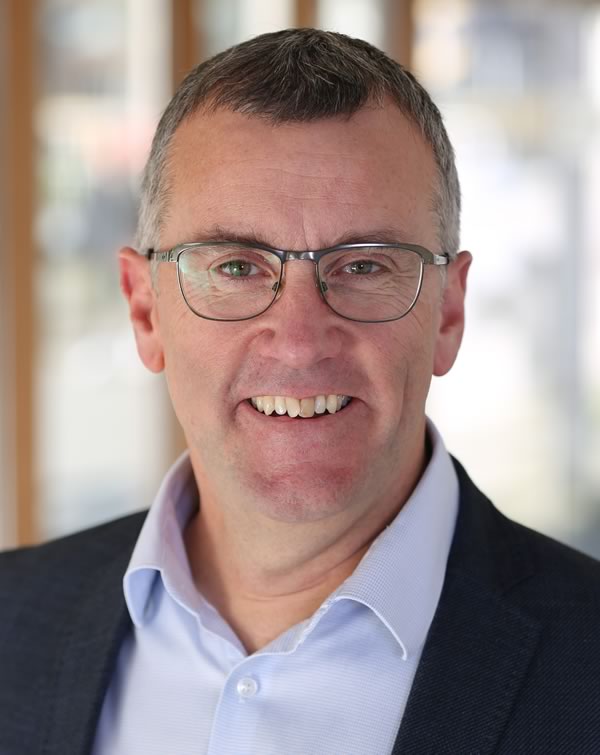
Emily Farran
Emily Farran is Professor of Cognitive Development, at the University of Surrey, UK, where she directs the Cognition, Genes & Developmental Variability Lab. Emily completed her PhD at the University of Bristol in 2001 and has since worked at the University of Reading, UCL Institute of Education and the University of Surrey.
The broad aim of her research is to characterise typical and atypical development of cognitive functions within the context of the developing brain. This includes identifying factors of risk and resilience for learning, with a specific focus on the relationship between spatial thinking and mathematics achievement. A definitive feature of her work is the translation of research into practice. For example, she collaborated with the Early Childhood Maths Group to design the Spatial Reasoning Toolkit, an evidence-based practitioner resource (75,000+ views; adopted by Teach First, NCETM), and led the first teacher-delivered spatial training programme in England, SPACE. These efforts were recently recognized by receiving the 2025 British Psychological Society Impact and Engagement Award.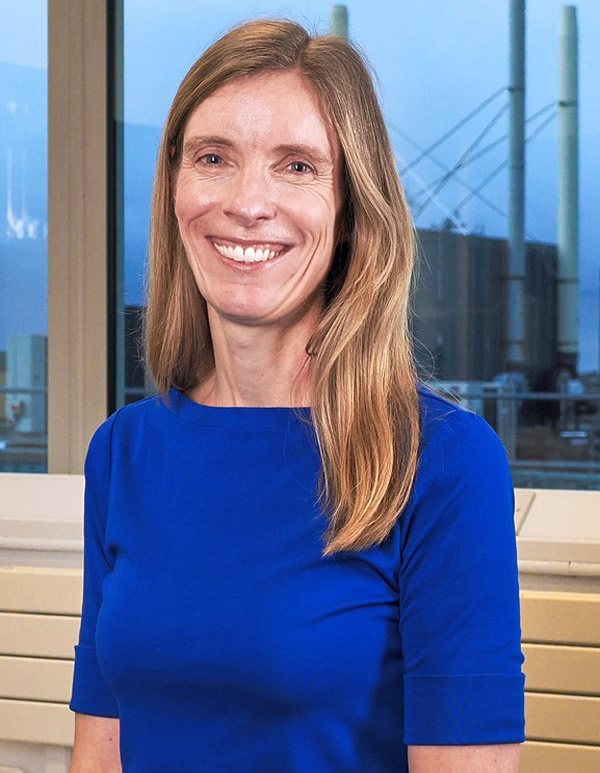
Camilla Gilmore
Camilla Gilmore is Professor of Mathematical Cognition at Loughborough University and Director of the ESRC Centre for Early Mathematics Learning.
Her research focuses on understanding how we learn and process mathematical ideas and what this means for mathematics education. This work has a particular focus on cognitive and environmental influences on numeracy development. This includes the role of executive function skills and spatial reasoning in mathematical development.
Camilla’s background is in developmental and cognitive psychology, and she has previously studied and worked at the universities of Nottingham, Oxford and Harvard. She has held research fellowships from the British Academy and the Royal Society and has received awards from the Experimental Psychology Society, the British Psychological Society and the British Society for Research in Learning Mathematics.
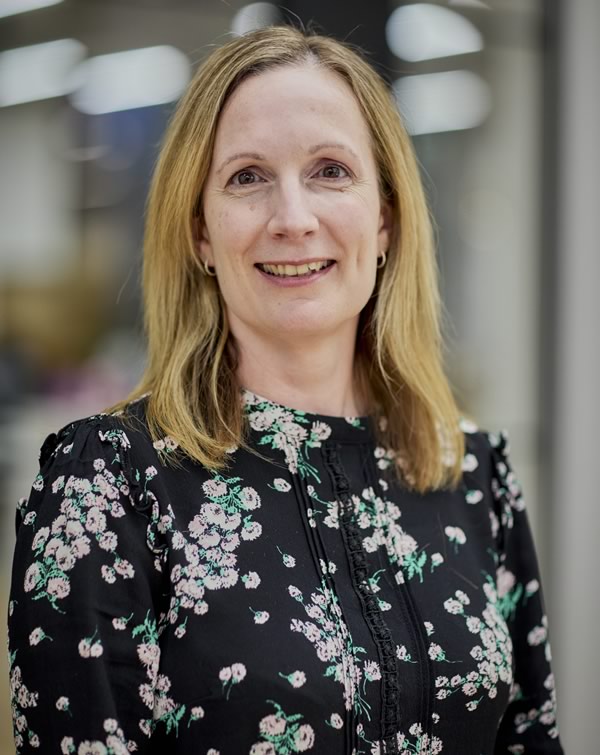
Bryn Jones
Bryn Jones is the Head of Mathematics at Newbattle High School in Midlothian, Scotland. A graduate of the Teach First programme, he has a career spanning leadership and teaching roles across Lancashire, Fife, and Midlothian.
Bryn is a leading practitioner in the development and delivery of the Scottish Higher Applications of Mathematics course. Having taught the qualification since its inception, he has authored a textbook for the course and is the founder of ApplyingMaths.com, a widely used site for secondary mathematics resources. His work is defined by a commitment to moving beyond procedural learning, with a specific focus on the authentic teaching of statistics and data science.
Bryn is actively involved in the national Curriculum Improvement Cycle in Scotland, contributing to the refreshed mathematics curriculum with a particular emphasis on statistical literacy. A frequent speaker at the Scottish Mathematical Council and Tayside Maths conferences, he is a passionate advocate for improving teaching and learning outcomes in schools serving areas of high deprivation.